
UNCLAIMED MONEY USA
An Easy Guide To Alaska unclaimed property
Your simple guide to finding and claiming money in Alaska.
Introduction To Alaska Unclaimed Property
If you’re searching for unclaimed money in Alaska, you’re not alone. Every year, financial assets such as forgotten bank accounts, uncashed paychecks, insurance benefits, stock dividends, security deposits, and even the contents of safe deposit boxes are turned over to the State of Alaska when the rightful owners cannot be located.
The Alaska Treasury Department’s Unclaimed Property Program safeguards these assets until they can be reunited with their owners. If you’ve lived, worked, or done business in Alaska, it’s worth taking a few minutes to search for your name—you may be surprised by what you find.
What Is Unclaimed Property and How Does It Work In Alaska?
If you’re new to this system, the term ‘unclaimed property’ can be slightly confusing. Unclaimed property refers to financial assets that have been lost, forgotten, left inactive, or abandoned by their rightful owner. The easiest way to look at it is like this – for all intents and purposes, ‘unclaimed property’ and ‘unclaimed money’ are the same exact thing. The ‘property’ is never physical property like a house, land, or car, but rather a financial asset of some kind.
The holders of the unclaimed money (most often a business) are required by law to try and return the funds to the rightful owner, but if they’re unable to do so they will report the amount and various pieces of information about the owner to Florida’s Department of Financial Services. The most common types of unclaimed property in Florida are:
- Inactive bank accounts
- Unclaimed insurance payouts
- Stocks
- Dividends
- Uncashed checks
- Deposits
- Credit balances
- Refunds
- Abandoned safe deposit boxes in financial companies
For even more detailed information on how unclaimed property works in Florida, visit the state’s official Division of Unclaimed Property website.
How to Find and Claim Unclaimed Money in Alaska
Searching for unclaimed money in Florida is fairly straightforward. Before you begin searching, here are a few things you’ll need to complete the entire process:
- A copy of your driver’s license or some other type of state or government ID.
- Your social security number
- A physical document to provide proof of residency for the address associated with the claim
- A stamp and an envelope
- A printer* (You can actually bypass this if you don’t have access to one)
Keep in mind you don’t need any of these things to simply search and see if you have Florida unclaimed money to begin with. However, if you do find unclaimed money and want to see the process through to the end, you’ll need the materials listed above.
Step 1: Visit the Alaska Department of Revenue Treasury Division Website
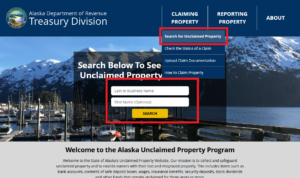
Visit the official Alaska unclaimed property website. From the homepage, you can either hover over “Claiming Property” on the top navigation bar and click “Search For Unclaimed Property”, or simply enter your name or business name right in the search box provided.
Step 2: Enter Your Information To Perform Your Search
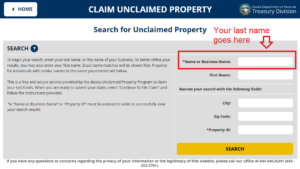
If you entered your information on the homepage, you can skip to step 3. If you chose to navigate to Alaska’s “Search for Unclaimed Property” page, this is where you can enter not only your name, but more specific information like city and zip code.
Important Tip: Just because you don’t live in a city anymore doesn’t mean you shouldn’t be looking for unclaimed money from when you lived there. In our experience it’s best to leave the city and zip code field blank when performing your first search so you can cast as wide a net as possible.
Step 3: Search For Your Name and Associated Addresses Among The Results
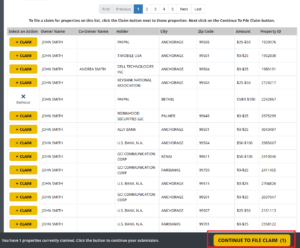
Search the results and look for a combination of your exact name + an address you associate with, either past or present.
A few quick tips to avoid confusion and maximize the chances of finding unclaimed money:
1. If you see your exact name but don’t recognize the city or address associated with it, then it isn’t you and you shouldn’t try to claim it.
2. If you have a common name, you might have to search multiple pages to potentially find yourself.
3. Make sure to try more than one of your names when applicable. If your full name is Christopher but you sometimes go by Chris, search twice for each one. Similarly, if you have a maiden name, try searching that in addition to your current last name.
Assuming you do find an exact match or multiple exact matches, click the yellow “+CLAIM” button for each corresponding row to add it as a claim.
Note: The Alaska Department of Revenue Treasury Division will not tell you the exact claim amount when displaying these results. There are four amounts you will see:
- $0-$25
- $25-$50
- $50-$100
- OVER $100
While it may be frustrating to not see the exact amounts when searching, the state does this strategically to to help protect claimant privacy and discourage fraudulent claims.
When you’re ready to continue, click the yellow “CONTINUE TO FILE CLAIM” rectangle.
Step 4: Select Your Claimant Relationship Type
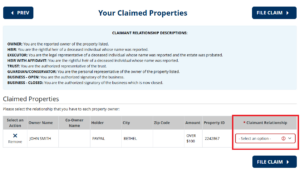
Next you’ll select your relationship type to the claimaint, which most of the time is going to be yourself. If that’s the case, you’ll select “OWNER”. If you are not the reported owner, read the options at the top of the page carefully to make the right selection.
When you’re finished choosing your claimant relationship type, click the blue “FILE CLAIM” button to proceed.
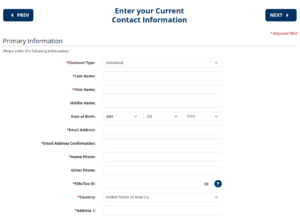
Step 5: Enter Your Current Contact Information
Fill in all the required information on this page. Make note of a few things:
1. You’ll need to enter your social security number or tax ID for this section. If you’re hesitant about entering this sensitive information, keep in mind this is an official government website with plenty of security mesasures in place to keep your information confidential.
2. Be sure to enter your current address here, even if it differs from the address associated with your claim.
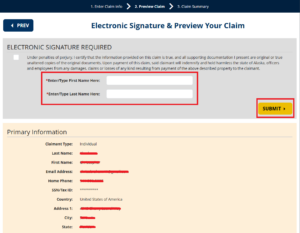
Step 6: Review Your Info One More Time and Give Your Electronic Signature
Make sure the information you provided is correct, type your first and last name into the appropirate fields, and click the empty box to give your electronic signature.
How To Check The Status Of Your Unclaimed Money
Once you’ve gone through the process of mailing your claim forms and relevant documents to Florida’s Department of Financial Services, checking the status of your claim is super easy. Note that you’ll need your Claim Number in order to check your claim’s status, which you will receive after completing the digital of the process on the FLTreasureHunt website.
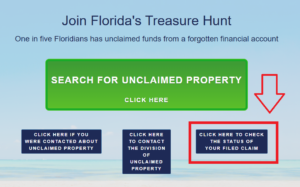
- From the FLTreasureHunt homepage, simply click the blue box that says “CLICK HERE TO CHECK THE STATUS OF YOUR FILED CLAIM”.
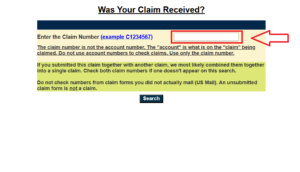
- Enter your claim number in the text box and click search.
Florida Unclaimed Property Scam Warnings + Other Things To Be Aware Of
While the process for claiming unclaimed property in Florida is 100% legitimate, that doesn’t mean there aren’t scammers out there trying to take advantage of you. Be aware that the Florida Department of Financial Services will NEVER contact you by text message concerning unclaimed money or your specific claim. If you do receive a text message from someone claiming to be from the Department, be sure to avoid clicking any links and promptly delete the message.
Did You Recieve a Letter From The State Saying You Have Unclaimed Money?
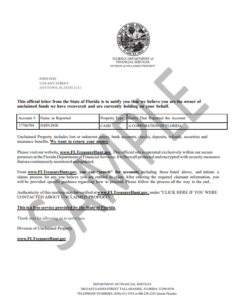
While the Department will never text you, they will sometimes reach out to you by sending a letter. If you have received a letter from the Florida Department of Financial Services notifying you that you have unclaimed money, this is in fact legitimate. Below is an example of what the letter should look like:
Private Entities Who Collect Your Unclaimed Money For a Fee
One more thing to be aware of is that private entities will sometimes contact holders of unclaimed money soliciting the owners for assistance in filing for a fee. While this is legal under Florida law, be aware that unclaimed property is a FREE service provided by the Florida government. You are not required to pay a single cent to claim your property, but certain private investigators and CPAs are counting on you not knowing this.
Florida Unclaimed Property Auctions and Events
Sometimes unclaimed property auctions are held in Florida where you can bid on items that are considered unclaimed. The proceeds go directly to the owner’s account, where the money sits indefinitely until the owners or their heirs claim it.
The next Florida auction is being held Saturday, August 8th. Below are all the details:
When:
Friday, August 7th (Preview day only)
Saturday, August 8th (Auction day only)
Where:
Embassy Suites by Hilton
1601 Belvedere Road
West Palm Beach, FL 33406
561-689-6400
For more information on this auction, go to https://www.fltreasurehunt.gov/Auction.jsp
Helpful Resources
Below we’ve provided some resource links if you want to learn more about the Florida unclaimed property system.
Frequently Asked Questions About [State] Unclaimed Money
Is Alaska unclaimed money legit? What’s the catch?
Answer: Unclaimed property/money is 100% legitimate in Alaska, and all states for that matter. The process is managed by the Florida government,, and the website you use to find your unclaimed finds is an official government website with a .gov ending in the URL.
Does it cost money to search for unclaimed property in Alaska?
No, searching for unclaimed property is 100% free.